29 CFR 1910.1030
Bloodborne pathogens
An exposure control plan reviewed every year with input from frontline staff, safer sharps devices, a sharps injury log, hepatitis B vaccination offers, and annual training.
Hospital workers get hurt on the job at a higher rate than workers in construction or manufacturing, and much of it is preventable. Needlesticks, patient handling, workplace violence, and chemical exposures all fall under OSHA. We help hospitals, clinics, medical offices, and dental practices meet the rules without slowing down patient care.
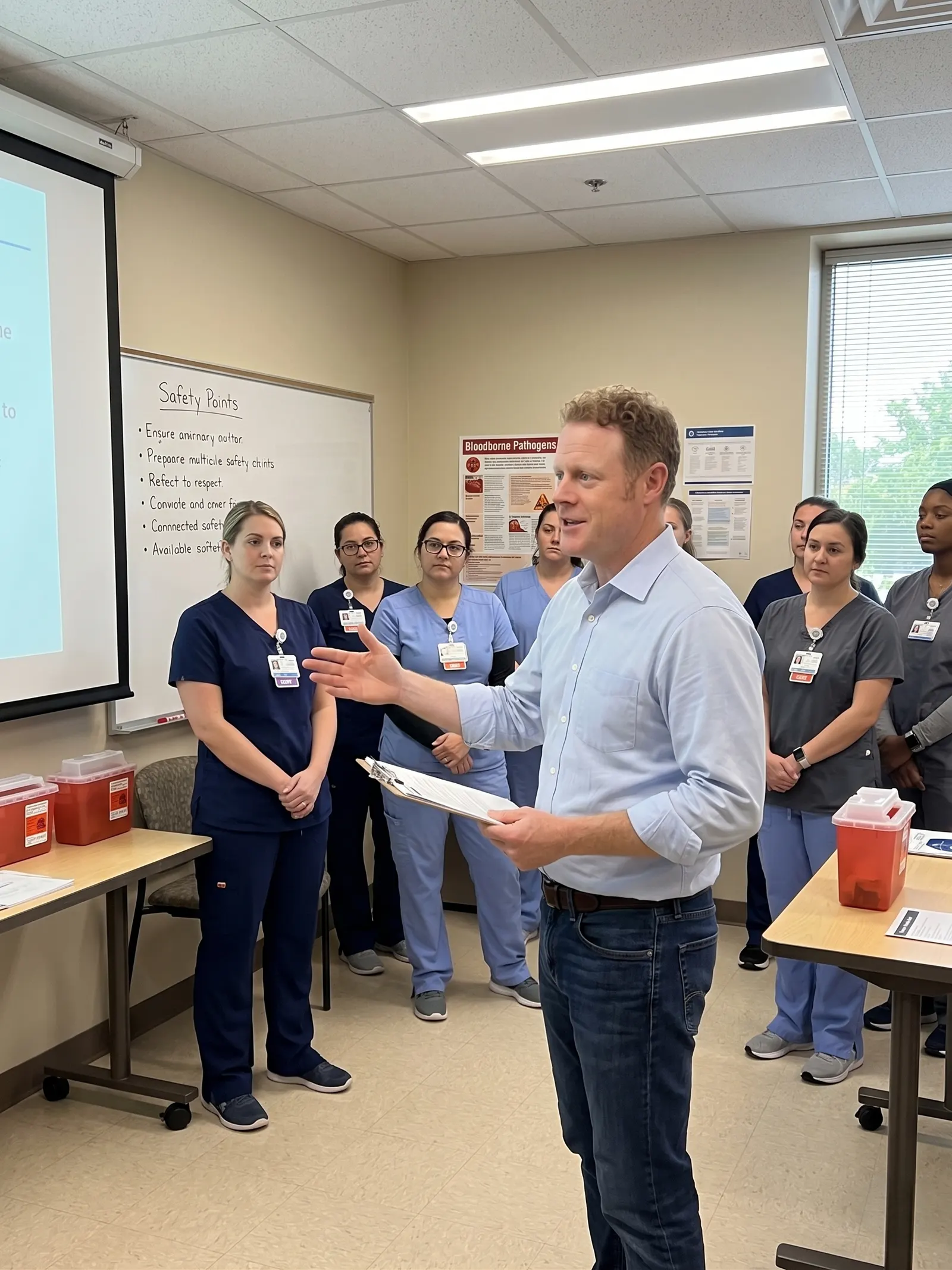
These are the OSHA requirements that matter most in care settings.
29 CFR 1910.1030
An exposure control plan reviewed every year with input from frontline staff, safer sharps devices, a sharps injury log, hepatitis B vaccination offers, and annual training.
29 CFR 1910.134
If staff wear N95s or other respirators for protection, you need a written program, medical evaluations, and annual fit testing.
29 CFR 1910.1200
Disinfectants, sterilants, lab chemicals, and cleaning products all need Safety Data Sheets, labels, and training.
General Duty Clause, Section 5(a)(1)
There is no specific federal standard yet, but OSHA cites healthcare employers for workplace violence under the General Duty Clause. A written prevention program, risk assessment, and incident reporting are the core.
General Duty Clause, Section 5(a)(1)
Lifting and moving patients is the leading cause of injury for many nursing staff. Lift equipment, policies, and training reduce both injuries and workers' compensation costs.
29 CFR 1910.1047, 1910.1048
Sterilization and pathology areas need exposure monitoring, controls, and training when these chemicals are in use.
29 CFR 1904
OSHA 300 logs, 300A summaries posted every February through April, and electronic submission to OSHA for many healthcare establishments. Privacy cases, like needlesticks, must be logged without the employee's name.
29 CFR 1910.147, 1910.37
Engineering, environmental services, and food service teams face lockout/tagout, exit route, and slip hazards that are easy to overlook in a clinical setting.
Why TSG
From 2018 to 2026, Matt Thompson, CSP, served as Executive Director of Occupational Safety and Health at Wellstar Health System, a Georgia health system with more than 38,000 employees and 350 locations. He built that department from the ground up and led both occupational safety and workers' compensation.
That means we know how hospitals, physician practices, and support services actually run, and how to make OSHA programs work around patient care instead of against it.
Certified Safety Professional (CSP) · Associate Safety Professional (ASP) · Authorized OSHA Outreach Trainer · More about Matt
A walkthrough of clinical and support areas, plus a review of your exposure control plan, respirator program, and OSHA logs.
Bloodborne pathogens, respiratory protection, hazard communication, and workplace violence prevention programs written for your setting.
Annual bloodborne pathogens and hazard communication training, delivered on site or virtually around shift schedules.
The most common are bloodborne pathogens (1910.1030), hazard communication (1910.1200), and exit routes and emergency action plans (1910.36 to 1910.39). Most physician and dental offices are partially exempt from keeping OSHA 300 injury logs, but every employer must report severe injuries to OSHA. Offices that use respirators or certain sterilants have additional requirements.
At least once a year, and whenever tasks or procedures change. The annual review must consider safer medical devices, and you must ask frontline staff who handle sharps for their input and document it.
There is no specific federal workplace violence standard yet, but OSHA cites healthcare employers under the General Duty Clause when violence is a recognized hazard and reasonable steps were not taken. Some states and accreditation bodies have their own requirements as well.
Many do. Hospitals, nursing homes, and other healthcare establishments that meet OSHA's size thresholds must submit injury and illness data electronically each year. We can help you confirm whether your locations are covered.
Yes. Dental offices have a smaller footprint but many of the same hazards, including sharps, chemicals, x-ray equipment, and infection control. We offer compliance packages built for dental practices.
Answer a few questions about your facility and your fixed price is emailed to you in minutes. Or call Matt directly at 770-744-3791.